
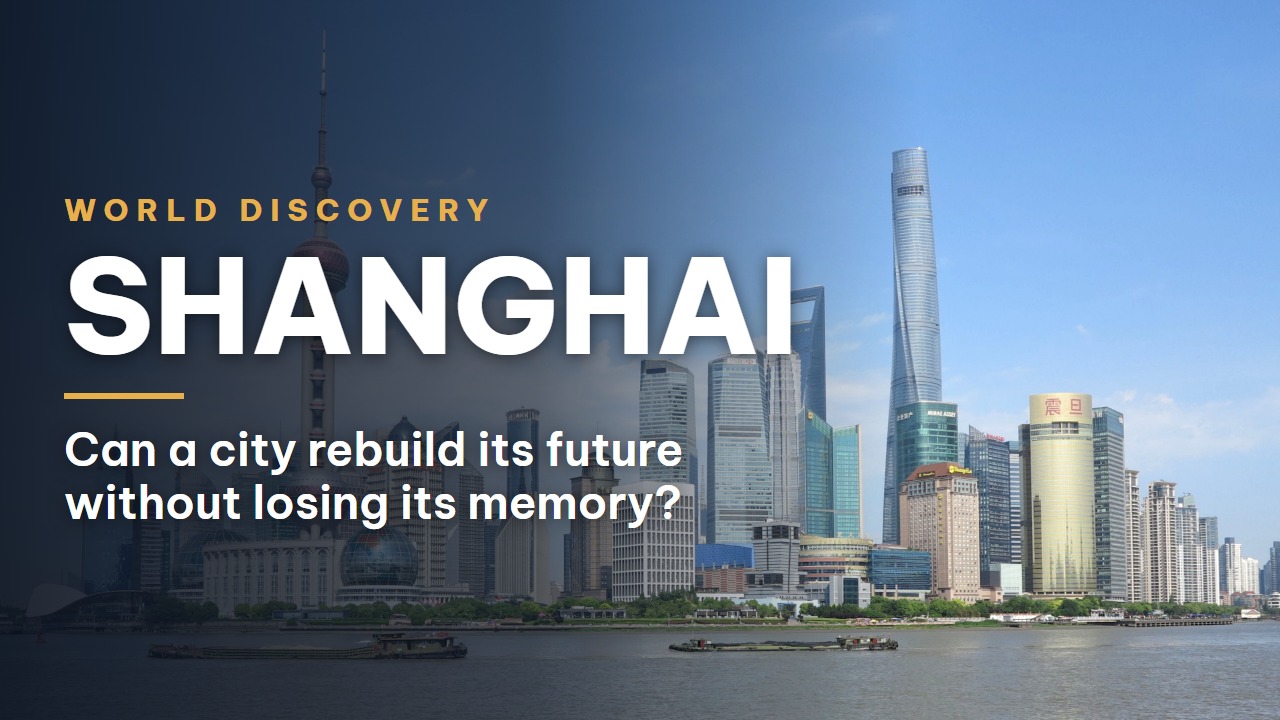
Shanghai history is unusually easy to read from the water. The Bund and Lujiazui face each other across the Huangpu River, placing different layers of the city in a single view—and raising the question at the heart of this documentary: can Shanghai keep rebuilding its future without losing its memory?
Key facts
- Shanghai stands at the mouth of the Yangtze River in eastern China, facing the Pacific (Shanghai Municipal People’s Government).
- The Huangpu River is 113 kilometres long and roughly 300–770 metres wide; it divides Puxi and Pudong before entering the Yangtze (Shanghai Basic Facts).
- Shanghai became a market town in 1267, and Shanghai County was established in 1292 (Shanghai Basic Facts).
- Pudong’s development and opening were announced on 18 April 1990 (Shanghai Municipal People’s Government).
- The Port of Shanghai handled 51.506 million TEU in 2024, leading the world in container throughput for the fifteenth consecutive year (Shanghai Municipal People’s Government).
Location: Shanghai history begins at the water
Shanghai’s position explains why water remains the clearest way to understand the city. It lies where the Yangtze reaches the eastern coast of China and opens towards the Pacific. The Huangpu runs through this setting, separating Puxi from Pudong before meeting the Yangtze.
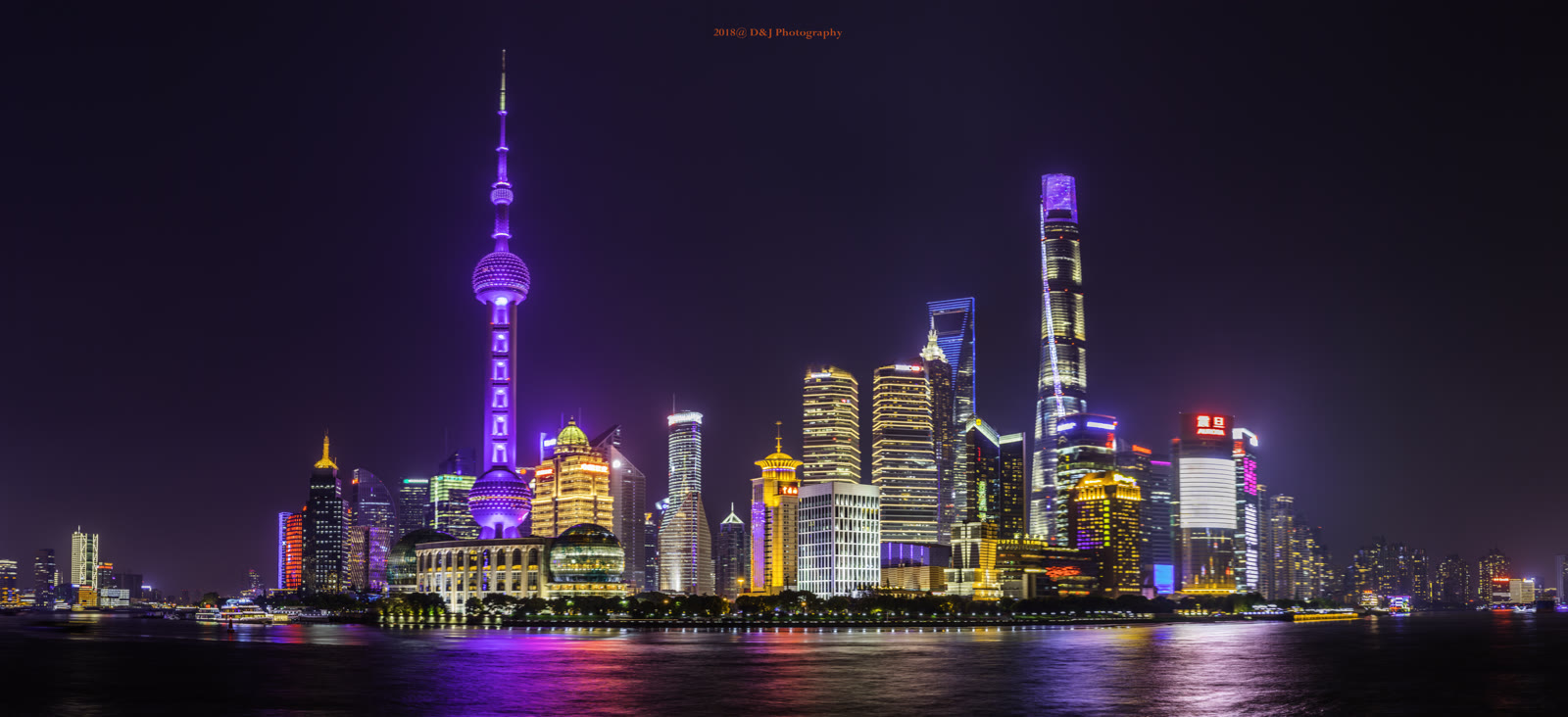
The contrast is most legible between The Bund and Lujiazui. They stand opposite one another across the Huangpu, allowing two layers of urban development to be seen together (Shanghai Municipal People’s Government). This is not an absolute division between an “old” west and a “new” east; both banks contain history and everyday life.
History: turning points rather than a simple rise
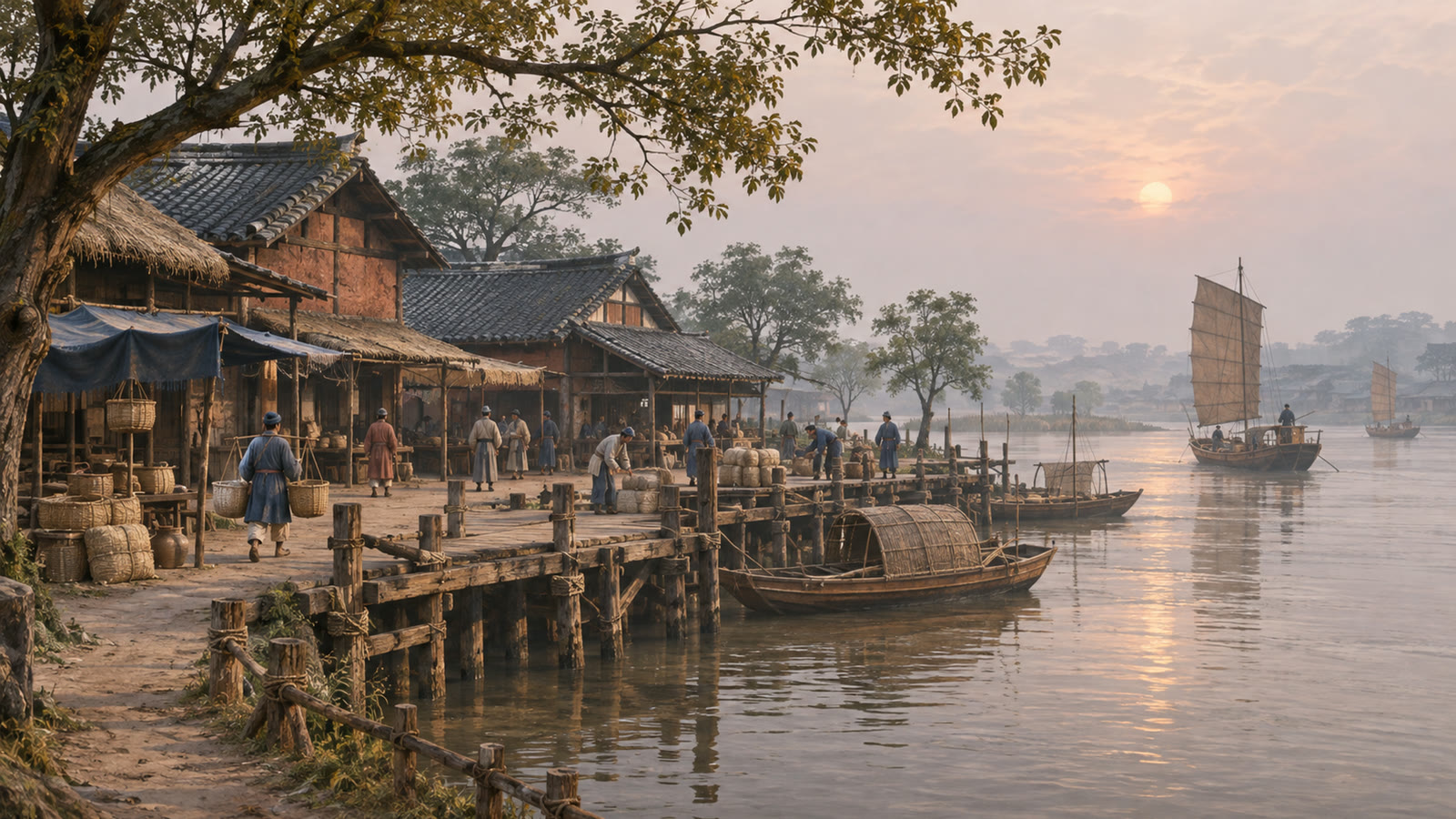
The early administrative record begins well before Shanghai’s period as a global port. A market town formed in 1267, followed by the establishment of Shanghai County in 1292. These dates are milestones in governance, not a claim that the city suddenly appeared at one moment.
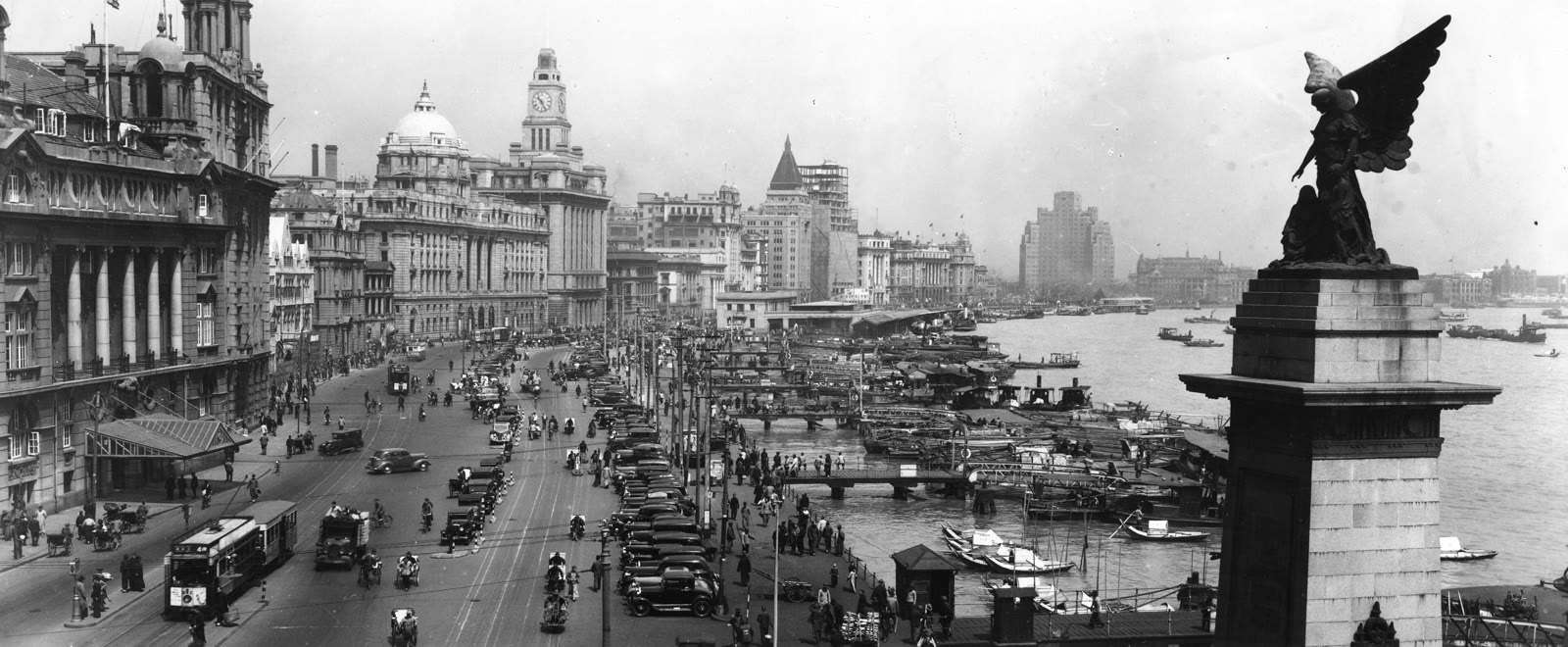
A much more disruptive change followed the Treaty of Nanking in 1842. Shanghai became a treaty port and formally opened in 1843 (Oxford Academic). That opening must be kept in its coercive context rather than presented as a voluntary invitation to foreign commerce. A British settlement was established in 1845, and foreign-administered settlements continued until 1943 (Shanghai Municipal People’s Government).
The Bund became the financial centre of old Shanghai, with multiple architectural styles standing side by side (Shanghai Municipal People’s Government). Its façades are therefore more than a picturesque background. They belong to a history shaped by trade, foreign administration and unequal power. Reading them carefully means holding visual grandeur and historical tension in the same frame.
Architecture: from The Bund to shikumen and lilong
The monumental riverfront is only one scale of Shanghai architecture. Inside the city, shikumen houses combine Jiangnan dwelling traditions with Western influence. Their dense lilong layouts use space efficiently (Shanghai Municipal People’s Government). In English, “stone-gate house” suggests the doorway; the paired term lilong points to the lanes and the closely arranged urban fabric around it.
This form grew amid intense pressure on housing. Refugees arriving in the mid-nineteenth century increased demand, while brick-and-timber construction gradually replaced earlier wooden houses. The result was not a single architectural style imposed from above, but a compact response to population movement, available land and a city changing quickly.
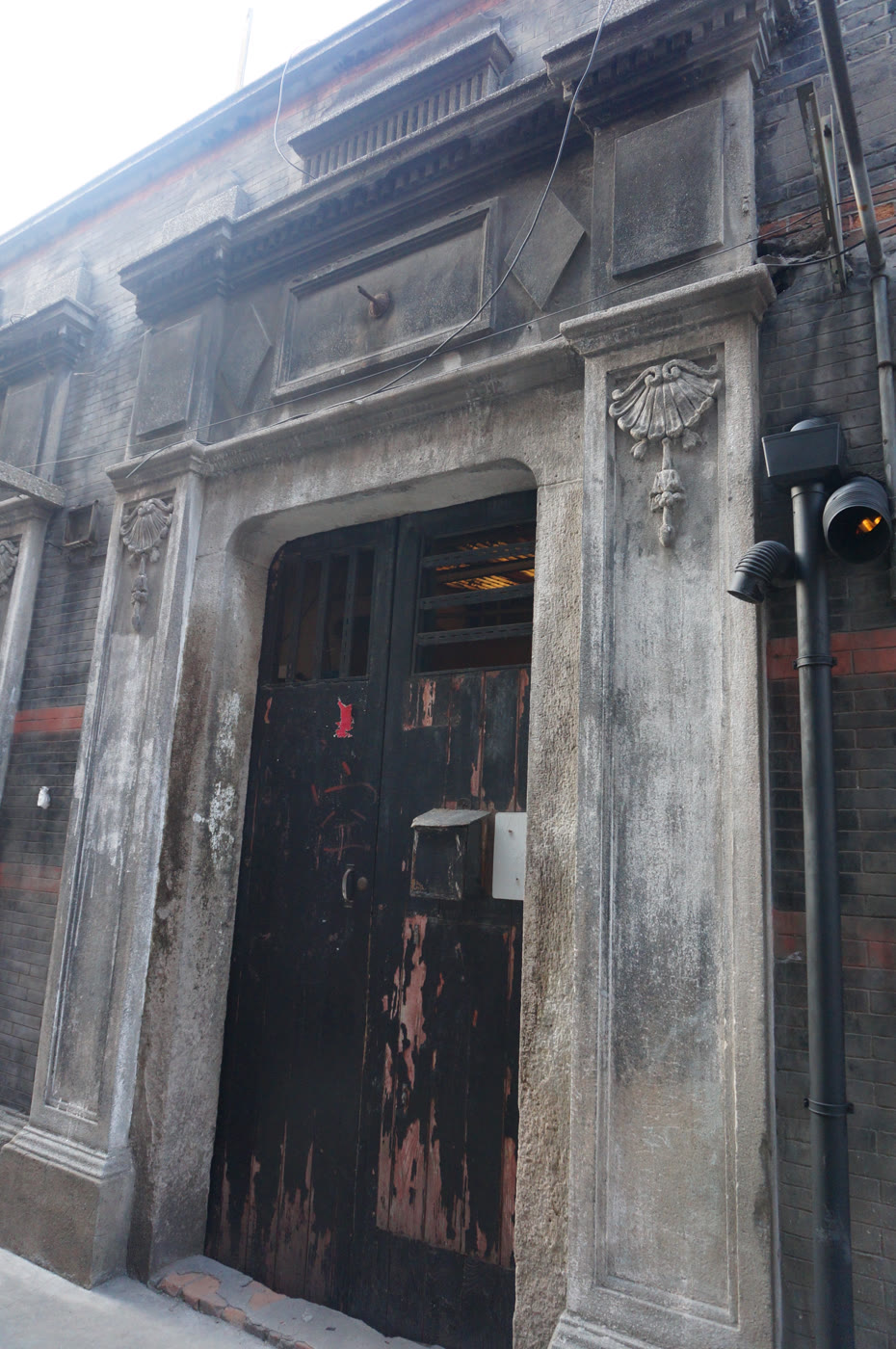
By the late 1970s, about sixty percent of Shanghai residents lived in shikumen housing. A figure published in 2025 estimated that roughly 2.5 million square metres remained, housing about 60,000 families (Shanghai Municipal People’s Government). Those figures make preservation a social question as much as an architectural one: protecting a building type also affects homes, privacy and community.
Daily Life: movement, lanes and design
Shanghai operates simultaneously at the scale of a lane and a metropolitan network. The lilong embodies close neighbourhood space, while the metro links daily movement across the wider city. In June 2025, the network measured 896 kilometres across 21 lines and 517 stations, carrying more than 77 percent of daily public-transport passengers (Shanghai Municipal People’s Government).
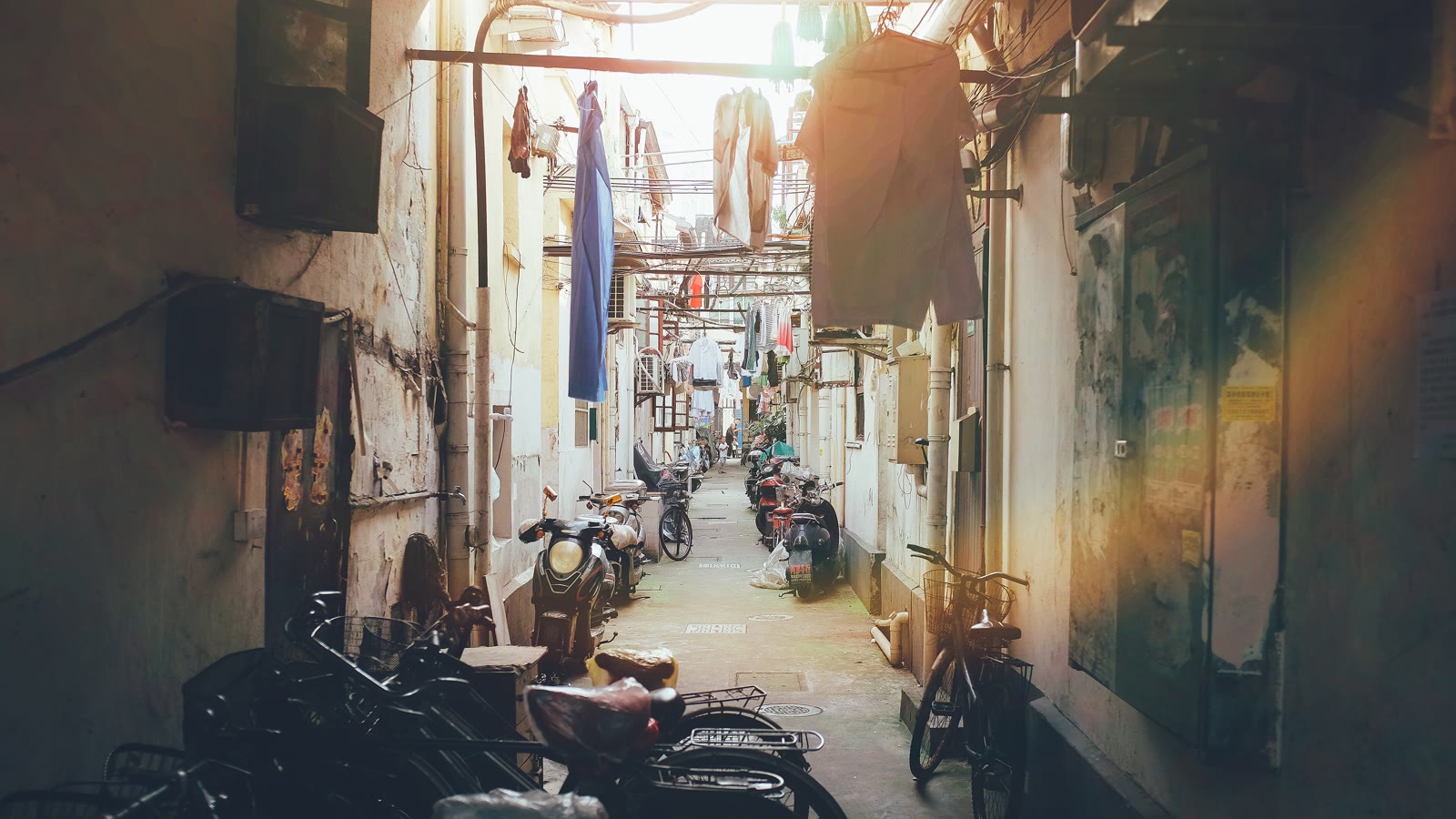
The cultural idea of Haipai also helps explain how Shanghai describes itself. The term refers to a local phenomenon formed through contact between traditional Chinese culture and Western industrial civilisation (Shanghai Municipal People’s Government). It is not a shortcut for saying that every influence blended smoothly. It is a way to recognise exchange, selection and reinterpretation in the city’s culture.
Shanghai joined the UNESCO Creative Cities Network as a City of Design in February 2010 (UNESCO). This is a design designation, not UNESCO World Heritage status for Shanghai, The Bund or shikumen. The distinction matters because accurate language protects the meaning of both local heritage and international recognition.
Food: local identity in technique and texture
Food brings the story down to the scale of a bowl, steamer or pan. Benbang cooking has folk roots in Sanlin and Gaoqiao and often uses braising, strong flavours and red soy sauce (Shanghai Municipal People’s Government). This is a broad account of a local tradition, not a rule that every Shanghai dish tastes the same.
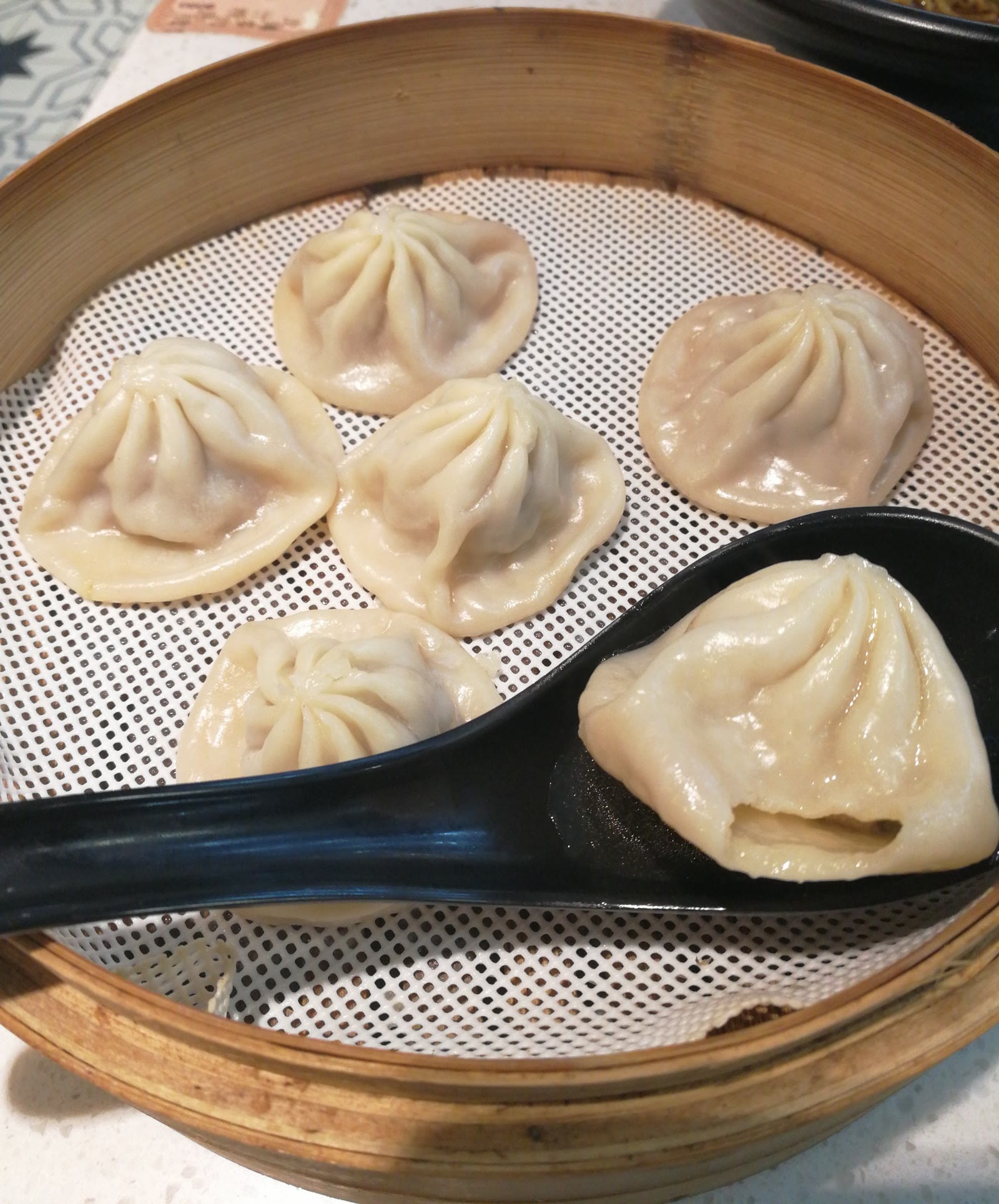
Nanxiang xiaolongbao are thin-skinned steamed dumplings containing filling and broth. Their making technique entered China’s national intangible cultural heritage list in 2014 (Shanghai Municipal People’s Government). Shengjianbao use half-leavened dough around a meat filling; their bases are pan-fried until golden before the buns finish steaming in the pan (Shanghai Municipal People’s Government). Together, the two foods show how local identity can reside in making, not merely in a famous name.
Economy: Pudong New Area and the port network
The decision announced on 18 April 1990 made Pudong New Area a central chapter in modern Shanghai. Before that shift, the area directly across from The Bund was mainly farmland and wharves. Lujiazui’s towers now occupy the most visible part of the east-bank view, but the economy depends on networks as much as landmarks.
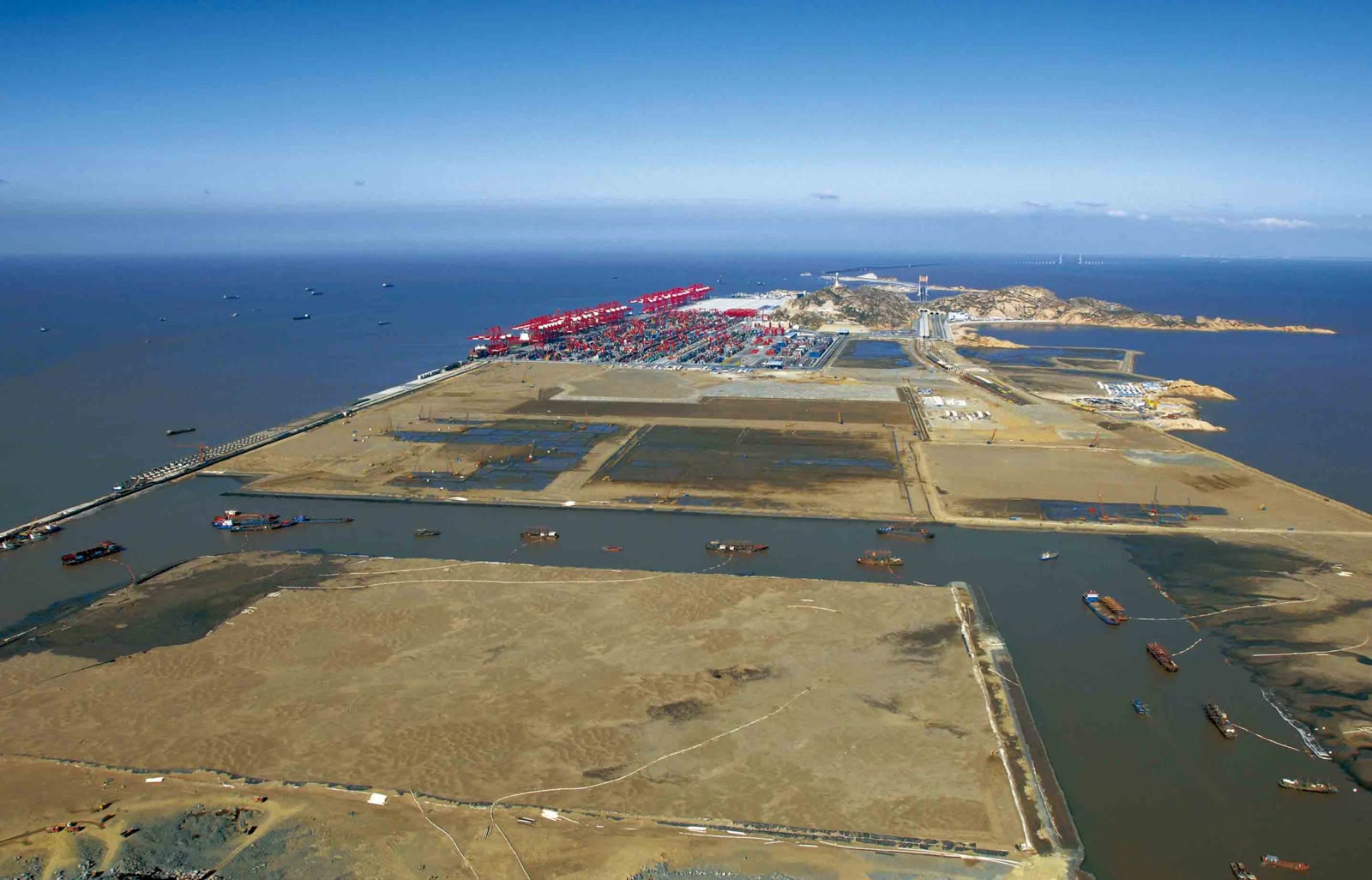
Shanghai Tower reaches 632 metres (Shanghai Basic Facts). Below the skyline, metro lines, roads and river crossings make the city function. Farther out, Yangshan Deep-Water Port serves as the deep-water container hub of Shanghai’s shipping centre and connects to Pudong by the Donghai Bridge (Shanghai city publication).
The port’s 2024 throughput—51.506 million TEU—placed it first worldwide by container volume for the fifteenth year running. That ranking is specific to container throughput, not every measure of a port.
Looking Back: what can a rebuilding city keep?
Shanghai’s response is visible along the river. By the end of 2017, 45 kilometres of waterfront on both banks, from Yangpu Bridge to Xupu Bridge, had been connected and opened to the public (Shanghai Basic Facts). In Yangpu, a 15.5-kilometre riverfront includes a 7.8-kilometre visitor route through reused industrial sites such as a power plant and waterworks (Shanghai Municipal People’s Government).
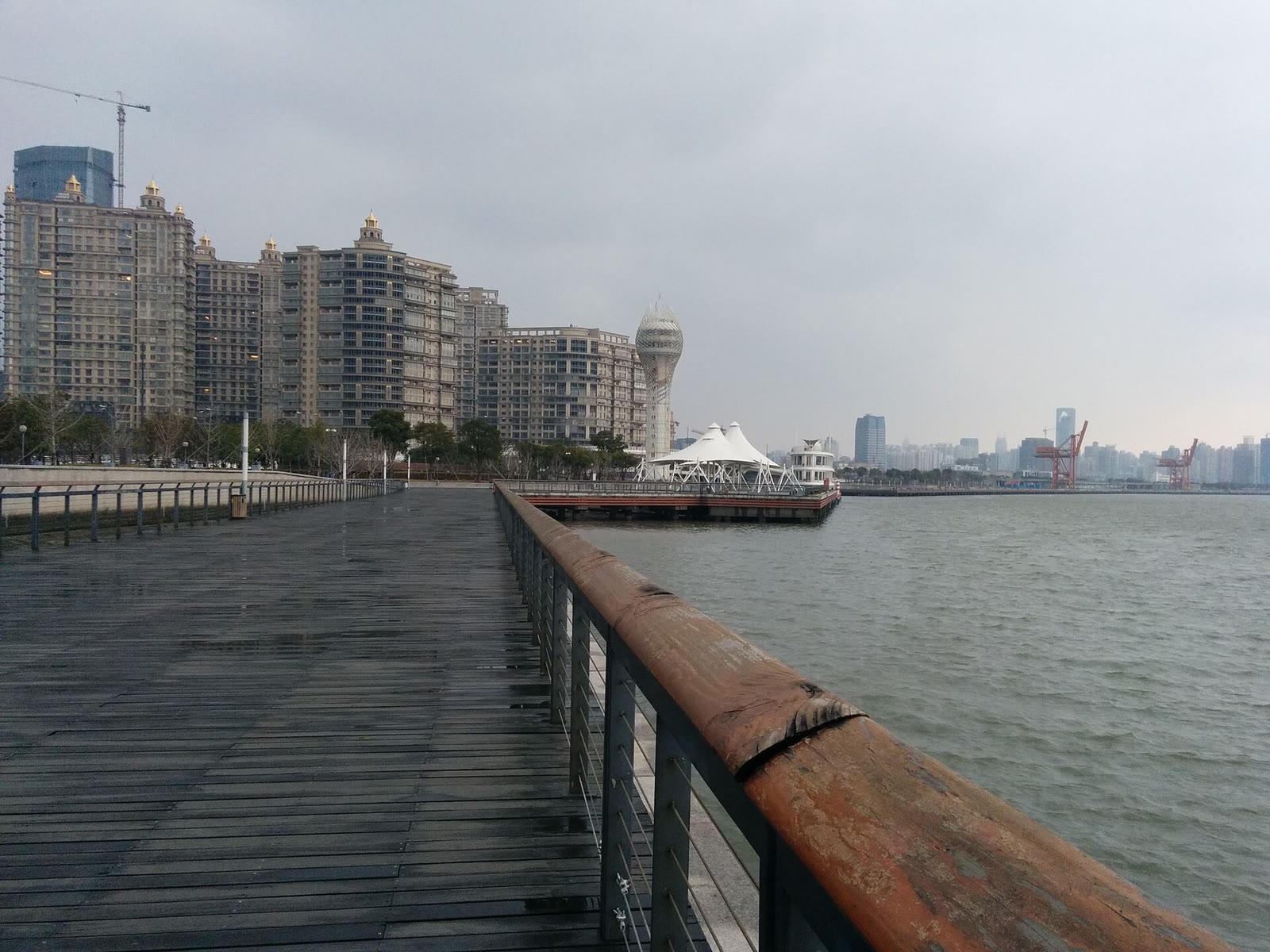
Another planning idea shifts attention from skyline scale to walking distance. Shanghai’s “fifteen-minute community life circle” aims to place services within a walk, and city material reports that more than 180 such circles had been built (Shanghai city publication). It is an aspiration and a reported programme, not proof of complete coverage.
Preservation can also involve striking engineering. In 2025, the roughly 7,500-tonne Huayanli complex was temporarily shifted by 432 small robots while underground space was built (Shanghai Municipal People’s Government). No single project resolves the tension between redevelopment and memory. Together, however, public waterfronts, adaptive reuse and the continued life of shikumen show where the negotiation is taking place.
FAQ
Why did Shanghai grow around the Huangpu River?
Shanghai lies at the mouth of the Yangtze, facing the Pacific, while the Huangpu divides Puxi and Pudong before joining the Yangtze (city overview; river facts). This setting explains the central role of water and port activity in the city’s story.
What is a shikumen house?
Shikumen combines Jiangnan housing traditions with Western influence and is organised through dense, space-efficient lilong lanes (official overview).
When did Pudong New Area begin developing?
The development and opening of Pudong were announced on 18 April 1990. The area opposite The Bund had previously been mainly farmland and wharves (official Pudong history).
Is The Bund a UNESCO World Heritage Site?
The cited UNESCO recognition is Shanghai’s entry into the Creative Cities Network as a City of Design in February 2010; it is not a World Heritage listing for The Bund (UNESCO).
What is special about Nanxiang xiaolongbao?
They are thin-skinned steamed dumplings with filling and broth. Their making technique entered China’s national intangible cultural heritage list in 2014 (official food profile).
Watch the Shorts
- Why was Shanghai born on the water?
- Inside a Shanghai lilong lane
- Three layers of Shanghai flavour
- Watch the WORLD DISCOVERY · China playlist
Sources
- https://english.shanghai.gov.cn/en-Overview/20231212/c9aa0f22df154557bbbbb30d996eb2b2.html
- https://www.shanghai.gov.cn/english2019/pdf/2022-ShanghaiBasicFacts.pdf
- https://www.shanghai.gov.cn/english2019/pdf/2018-ShanghaiBasicFacts.pdf
- https://academic.oup.com/edited-volume/61799/chapter-abstract/546302838
- https://english.shanghai.gov.cn/en-Overview/20231209/05cfb15755fe4cea80a0d3a1d69512e2.html
- https://english.shanghai.gov.cn/en-HeritageZones/20231208/f2ac293f546a4d32aba936f2e733a47c.html
- https://english.shanghai.gov.cn/en-ScenicSpots/20231211/98e70b4d4c54401895104e4dee9f16d8.html
- https://english.shanghai.gov.cn/en-Latest-WhatsNew/20250822/4feb5c4bd43b433fa86f9ef9a52336fe.html
- https://english.shanghai.gov.cn/en-Latest-WhatsNew/20250627/d8f21f2e7d3b45a5b03757e35039b806.html
- https://english.shanghai.gov.cn/en-CityTour/20250523/c69d722267b64663a6082c3e5e4ada7f.html
- https://english.shanghai.gov.cn/en-CityTour/20250530/b8fbbd2155c4468bab9b363a5e6c566a.html
- https://english.shanghai.gov.cn/en-ShippingServicesEnvironment-ShippingCenter/20250319/d8e315bd41714ce89dbbfc5708c5ae47.html
- https://english.shanghai.gov.cn/en-Homestyle-travelinshanghai/20231205/73659585a37f42d6b46a6987c0798b0c.html
- https://english.shanghai.gov.cn/en-SpecialtyFood/20260511/594d417a429d426e8442a47336c47574.html
- https://english.shanghai.gov.cn/en-Snack-travelinshanghai/20231205/1b1c394feda144c283df2abd3e8b2cec.html
- https://english.shanghai.gov.cn/assets/Download/2022-ShanghaiBasicFacts.pdf
- https://english.shanghai.gov.cn/cmsres/82/82807ce752024a6583b041090bd00d2a/7a5e8c4d7940b968edefb6a6480dfa23.pdf
- https://english.shanghai.gov.cn/en-CityTour/20250325/100ec92cb0ba4c36b24c5af1d2564715.html
- https://english.shanghai.gov.cn/en-Latest-WhatsNew/20250605/67d7437f7eac465a99f88f27b42e5ace.html
- https://www.unesco.org/en/articles/international-call-2026-shanghai-design-100-award?hub=80094